A kitchen that is well lit during the day can turn cold once night falls. The difference rarely comes down to the number of spotlights, and almost always to the colour temperature, the nature of the sources and the ability to dim them. Soft lighting is not weak lighting. It is lighting designed in layers, where each source plays a precise role and where the room can shift from functional to comfortable without you touching a single fitting.
Colour temperature changes everything
The first instinct to correct concerns temperature, measured in kelvins. Above 4000K, the light turns a clinical white and hardens faces, materials and timber. For a warm atmosphere, stay between 2700K and 3000K. This range brings artificial light closer to that of a candle or an incandescent bulb, and flatters matt finishes, dark lacquers and oak or walnut veneers. Check the colour rendering index too, the CRI. Below 90, tones wash out. Above it, your materials regain their true depth, which matters particularly on a stone worktop or a veneer with pronounced graining.
2200K
Candle
2700K
Warm white
3000K
Halogen
4000K
Neutral white
Multiply the sources, lower their intensity
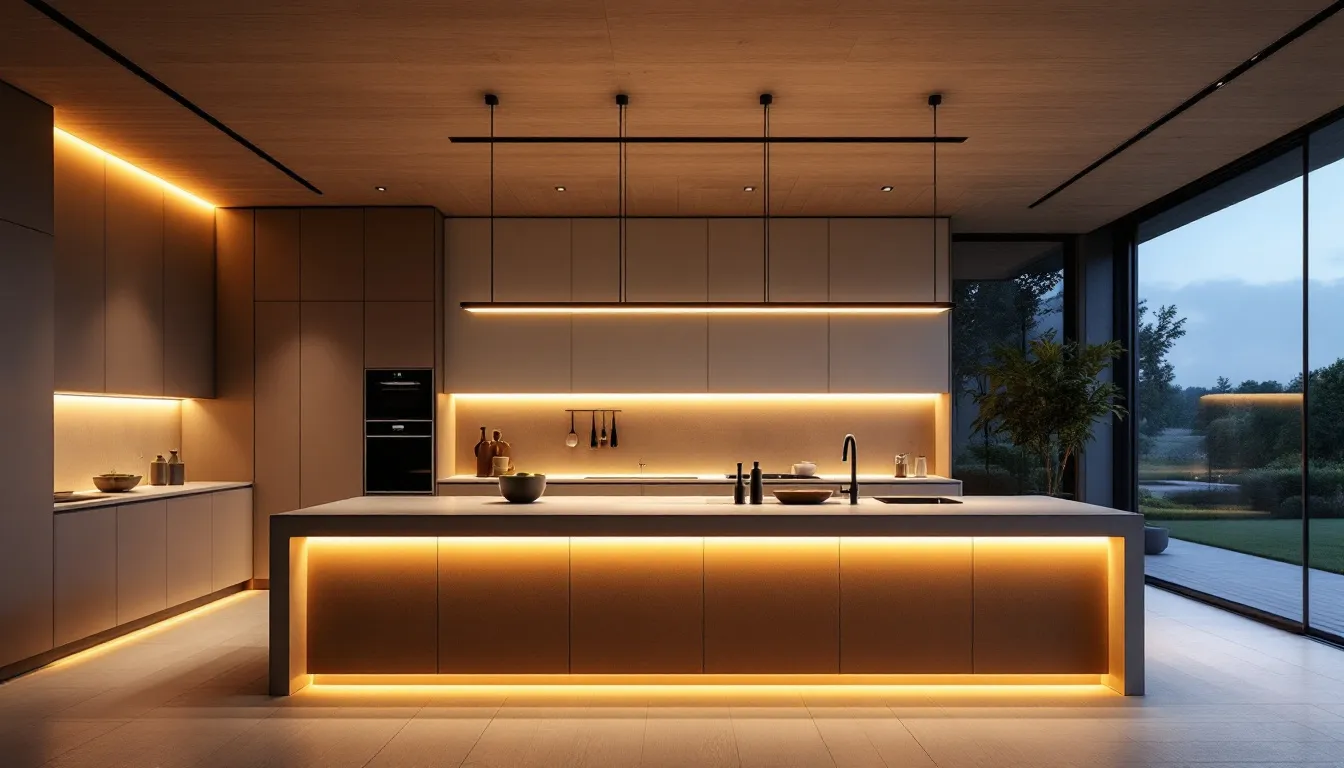
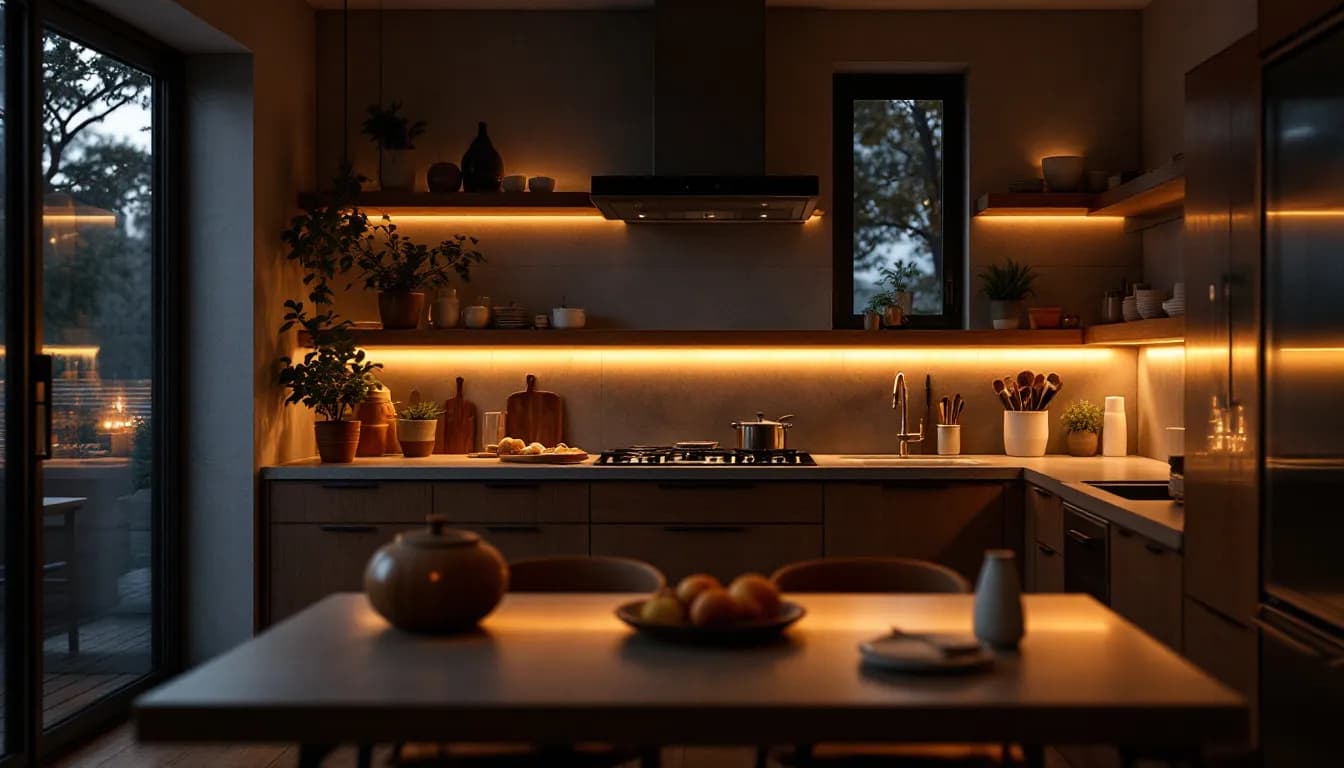
A single ceiling source, even well sized, flattens the room and allows no nuance. The soft approach consists of spreading three to five points of light at different heights. Indirect lighting in a plinth to underline the base of the units. An island drop or a strip beneath the upper worktop to graze the work surface without dazzling. A low pendant above the table or the island to anchor the dining corner. And one or two adjustable directional spotlights for the preparation areas. Each of these sources benefits from being dimmable, controlled by a dimmer or by scene. You then get a kitchen that moves from a working light at 100% to a late-evening atmosphere at 20%, without moving a thing.
The layers of warm lighting
- Indirect cornice beneath the wall units, a soft halo on the wall
- Plinth lighting, makes the lower blocks appear to float
- Low pendant above the table or the island
- Adjustable directional spotlight over the preparation areas
- A real candle or tealight holder, a warm focal point in the evening
Favour indirect light at strategic points
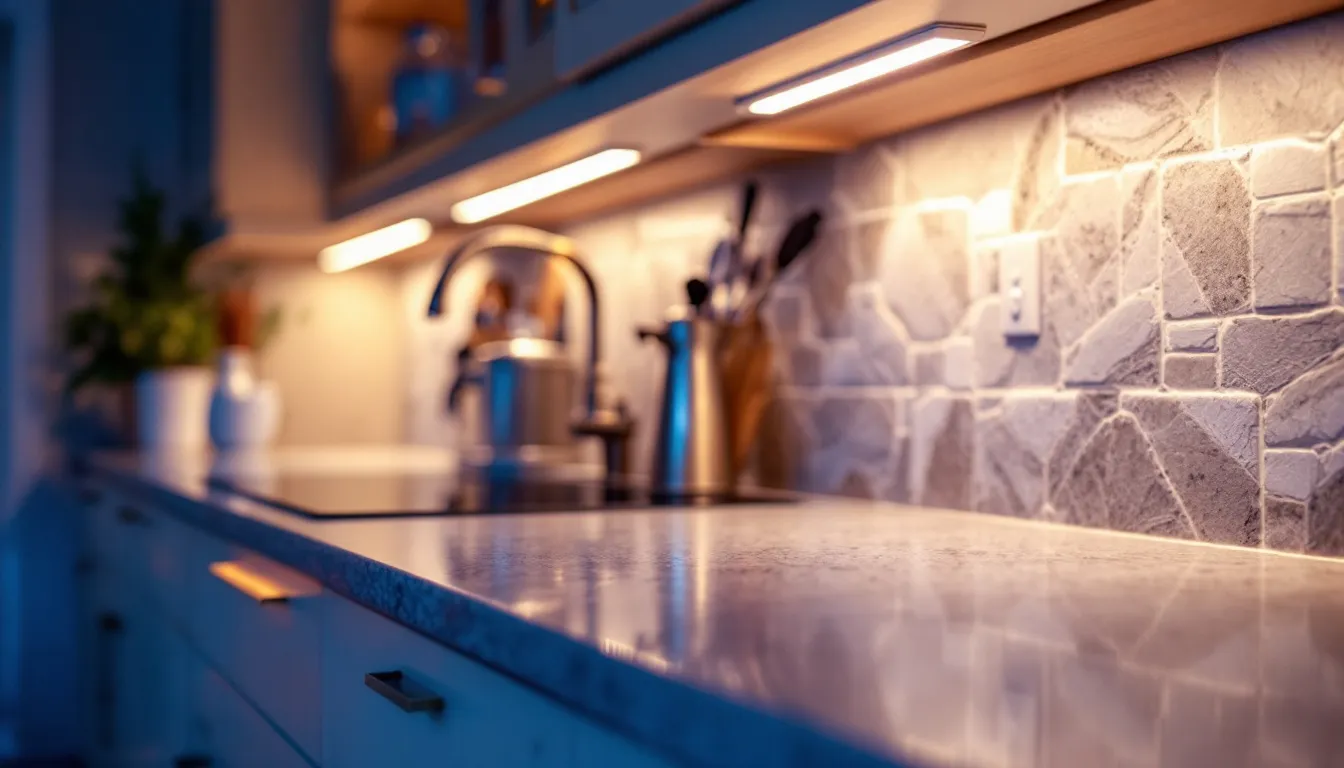
Indirect lighting is the signature of kitchens conceived as living spaces. The principle is simple: the source itself stays invisible, only the light it casts is seen. Slipped into a plinth, it makes the lower units float and stretches the floor. Set into an island drop, it draws a halo that isolates the central worktop from the rest of the room. Hidden beneath a high shelf, it reveals the wall, which enhances a stone splashback, a fluted veneer or a patterned tile. This lighting does not replace the functional sources, it accompanies them and carries all the work of atmosphere.
Do not forget the adjoining areas
An open kitchen connects with a living room, sometimes with a dining room. Soft lighting has to be conceived on the scale of the whole continuum, not just the kitchen in isolation, a requirement shared by any project for lighting an open kitchen. The same colour temperature on either side, consistent intensities, and where possible a central control of the scenes so the whole zone shifts into evening mode with a single gesture. It is this overall work that gives the space its unity and avoids the shop-window effect, where the kitchen stays brightly lit while the living room sinks into shadow.
The essentials, planned upstream
Soft lighting cannot be improvised once the units are in place. Three decisions make it truly effective: a warm dominant held between 2700K and 3000K, multiple dimmable sources spread at different heights, and priority given to indirect light, slipped into plinths and drops rather than added on the face. Settle these three points at the drawing stage, and the room will know how to move from working light to evening without a single unit shifting. These integrated cornices and drops are part of the vocabulary of kitchens conceived as living spaces, like the Living collection, where the indirect sources are housed within the unit itself.