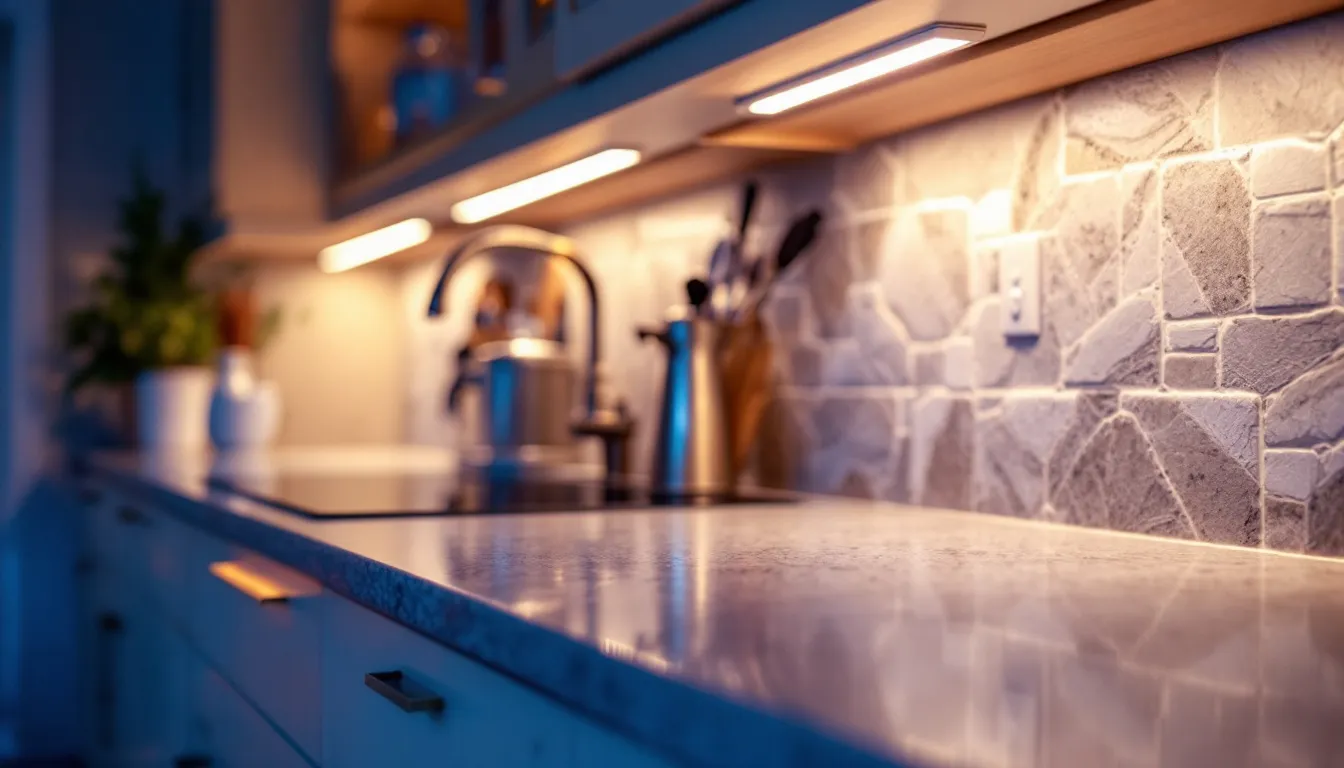
A marble worktop owns its character. This stone lives with your kitchen, it gains a patina, it accepts marks that other materials reject. It is precisely this acceptance of the material that separates an ambitious kitchen project from a perfect but soulless kitchen. Here is how to care for marble without turning it into a museum piece.
Understanding marble before cleaning it
Marble is a metamorphic limestone rock, that is, a stone whose crystalline structure has been transformed under the effect of geological pressure and heat. Its composition remains dominated by calcium carbonate, which makes it sensitive to acids. A streak of lemon juice, a splash of vinegar, a drop of wine left on the surface can locally dull the polish within minutes.
This chemical reactivity is not a flaw, it is a characteristic. The Italians, who have worked marble since Antiquity, never sought to make it invulnerable. They used it for what it is: a noble material that takes on a patina.
Daily cleaning
The regular care of a marble worktop comes down to two gestures. A soft, damp cloth, and an immediate wipe. That is all.
For porous surfaces or recently installed marble, a pH-neutral soap diluted in lukewarm water is enough. Genuine savon de Marseille, without added fragrance, is the safest option. Avoid ordinary washing-up liquid, whose surfactants can in time dull the polish, and steer clear of any acidic product: white vinegar, descaler, diluted bleach, or multi-surface cleaners not specified for stone.
Greasy stains are lifted with clay stone or a gentle degreaser made for natural stone. Organic stains, coffee, tea, wine, call for a poultice of 12-volume hydrogen peroxide, left for a few hours under cling film. Limescale marks are treated with damp bicarbonate of soda, never with an acid.
Care routine
- Each day: soft, damp cloth, immediate wipe after food contact
- Each week: pH-neutral savon de Marseille diluted in lukewarm water
- Each month: inspect the at-risk areas (sink, hob, chopping corner)
- Every 12 to 18 months: renew the water-repellent and oil-repellent treatment
- Acidic or organic stain: act within the hour with a suitable poultice
The marking you have to accept
A marble worktop in a living kitchen will develop marks. A ring left by a glass, an oil stain not wiped in time, a localised dulling near the sink area. This is what is called patina, and it is precisely what gives the material its visual depth over the years.
Refusing this marking turns care into constant surveillance. Accepting it makes daily life far simpler. For anyone who wants the look of marble without this living dimension, quartz with a Calacatta pattern or large-format stone-effect ceramic offer an honest answer.
Preventive protection
Marble intended for kitchen use should receive a water-repellent and oil-repellent treatment at installation, then have it renewed every twelve to eighteen months depending on use. This treatment, invisible to the eye, considerably slows the penetration of liquids and gives you the time to wipe before a stain takes hold.
Matt or honed marbles are more forgiving than polished ones. The polish reveals the slightest local dulling by contrast. Matt absorbs the light more evenly and masks the micro-variations of the surface. For intensive kitchen use, the honed finish is often the right compromise between visual nobility and tolerance of use.
Caring for marble ultimately comes down to choosing your stance: aiming for a flawless surface demands constant vigilance, accepting the patina makes daily life light. The right water-repellent treatment at installation, simple and immediate gestures, and a little tolerance are enough to live with this stone for a long time without making it a battle.
As an extension
Marble takes on its full value when it converses with a kitchen architecture conceived for it. That is the spirit of the Icone collection, where the stone becomes the centrepiece of a composition. These materials are better judged by hand than in a photograph, and are worth seeing in a showroom before deciding.