Choosing the materials for a kitchen means weighing up some twenty surface-finish pairings that interact with the light, the touch, and the use. An honest guide does not hand you a recipe, it poses the right questions in the right order. Here is the framework we use with our clients to structure this choice rather than be subjected to it.
Start with the fronts, not the worktop
The temptation is to start from the worktop, because it is the most visible surface. That is a flaw in method. The fronts represent the bulk of a kitchen's built volume, they dictate the overall mood, and they determine the constraints of use. The worktop falls into line with them afterwards.
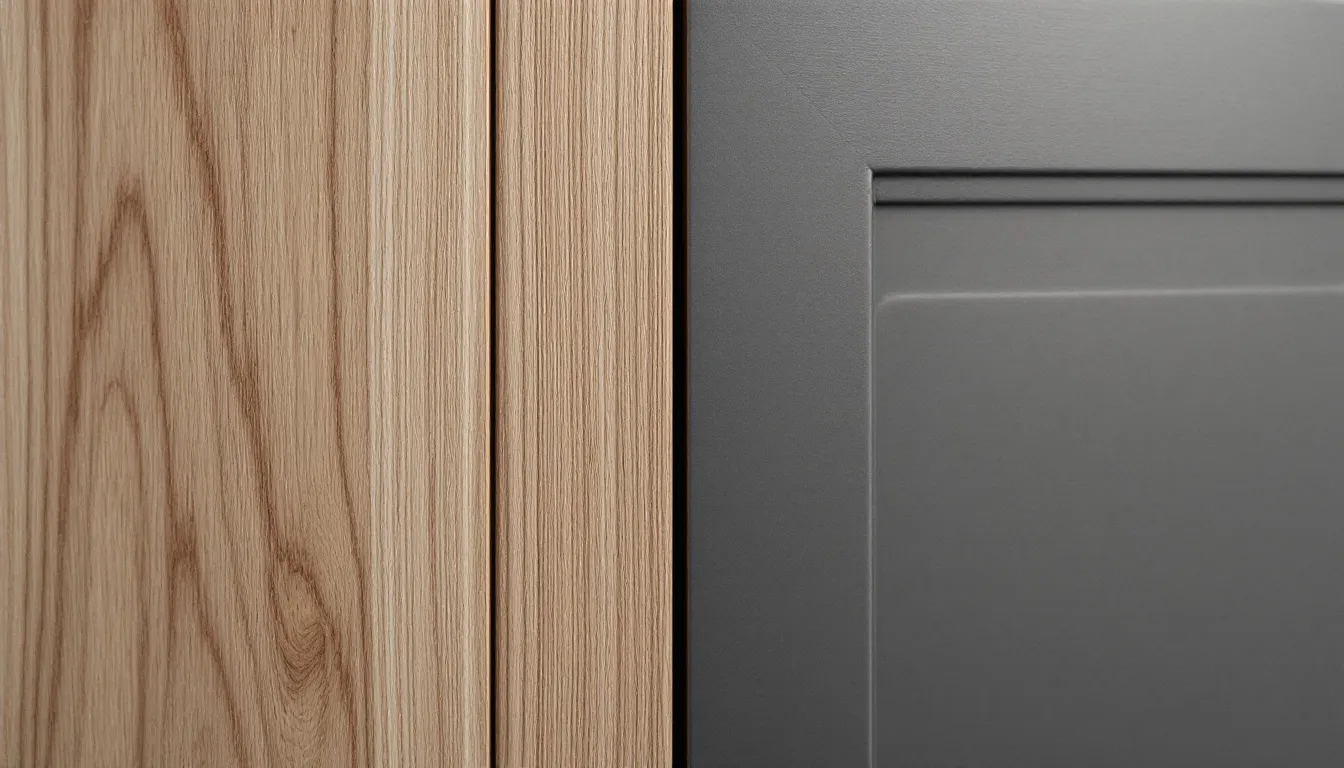
Four families of fronts structure the contemporary offer. Lacquer, matt or gloss, for architectural kitchens with a precise design. Real wood, most often as veneer, for tactile warmth and patina. Glass, as a full front or framed, for visual depth and ease of cleaning. High-density melamine, which covers the whole spectrum with an excellent price-to-performance ratio.
| Front | Look | Upkeep | Relative price |
|---|---|---|---|
| Matt lacquer | Understated, architectural, no reflection | Sensitive to fingerprints | High |
| Real wood | Tactile warmth, living grain | Oil top-up or gentle varnish | High to very high |
| Glass | Depth, light, visual purity | Very easy, microfibre cloth | Medium to high |
| High-density melamine | Wide palette, textured finishes | The most forgiving day to day | Medium |
The deciding criterion is not budget, it is the relationship between how you actually use the kitchen and the look you are after. A family with two young children who cook every day do not have the same priorities as a couple who entertain in an open kitchen.
The worktop: three main families
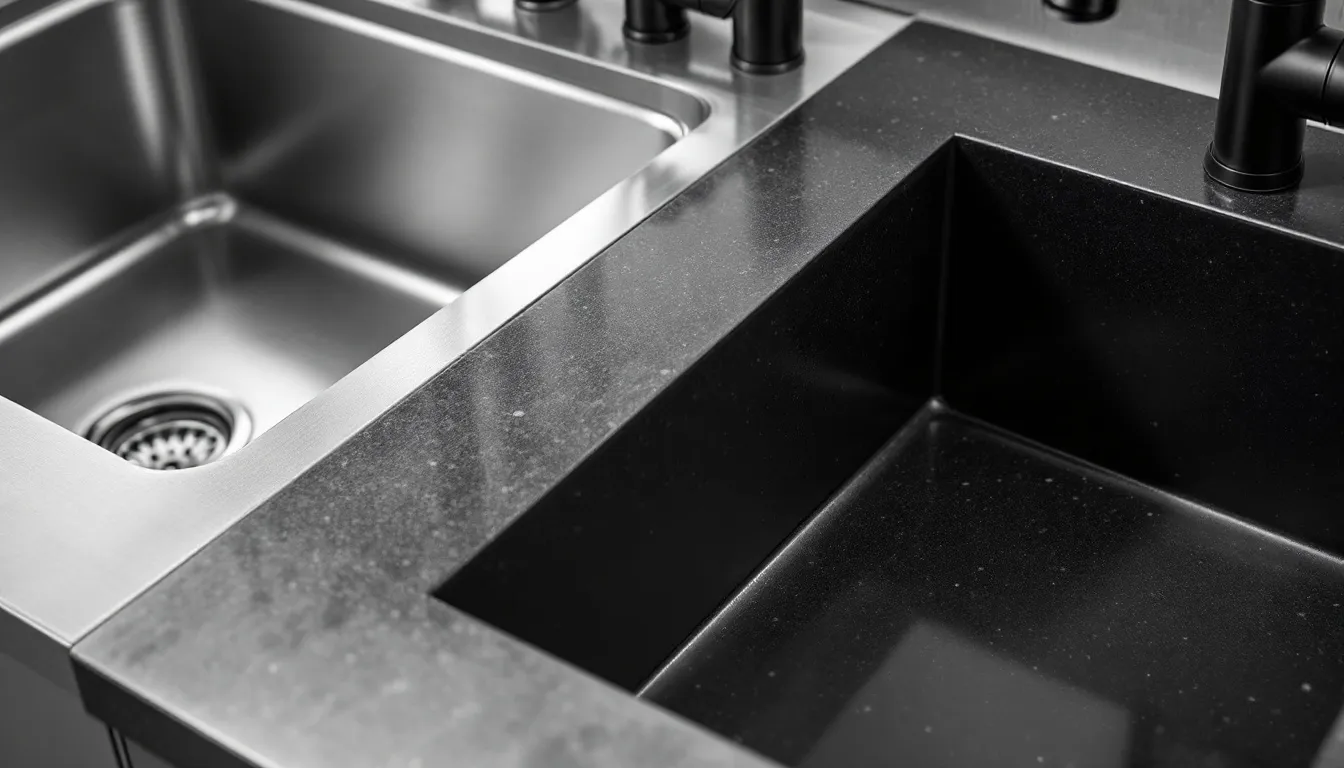
Once the fronts are settled, the worktop is chosen from three main families. Large-format ceramic, for absolute thermal resistance and a fine material. Engineered quartz, for uniformity of tone and resistance to stains. Natural stone, marble or granite, for living nobility and an accepted patina.
Dekton, halfway between ceramic and quartz, adds an interesting option for intensive use and very long runs. Stainless steel and solid wood occupy specific niches, the one for lovers of professional cooking, the other for very warm settings.
The thickness of the edge, overlooked in mainstream presentations, radically changes perception. A 12 mm edge gives a contemporary, light design. A solid 60 or 80 mm edge asserts an island and structures the room.
Handles and finishes: coherence in the detail
Integrated handles, now the standard of contemporary design, align the front and free up the visual volume. Applied handles, in brushed metal, braided leather or turned wood, signal a more pronounced intention instead. Neither option is superior: they answer two different styles of writing.
The splashback is the final link. Large-format tiling, a ceramic panel running up from the worktop, lacquered glass, or a continuation in metal: each solution involves its own technical junction. For a coherent kitchen, the splashback is chosen at the same time as the worktop, not afterwards.
Test the light before you sign
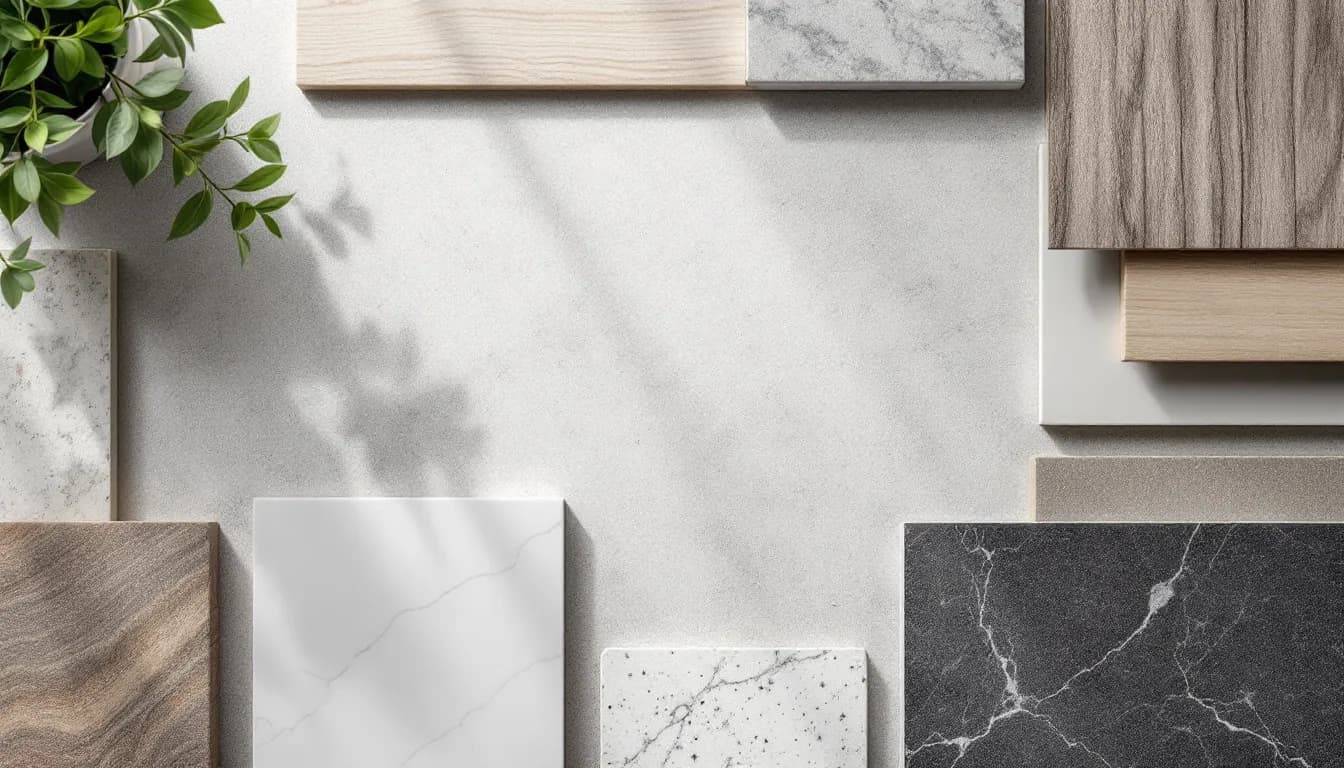
The biggest mistake in choosing materials is to approve samples under showroom lighting and then discover a different look once installed at home. The natural light of a north-facing room has nothing in common with that of a south-facing one. The temperature of LED lighting, from 2700 to 4000 kelvin, alters how woods, lacquers and stones are perceived.
If you can, ask to take home, for a weekend, the three or four shortlisted samples. Look at them in the morning, in full daylight, and in the evening under your current lighting. It is an hour's checking in total that saves regrets over ten years of use.
What to remember
Method comes before material. Fronts first, worktop next, handles and splashback to close the coherence: following this order avoids most regrets. And whatever catalogue you choose, the final word belongs to the light. A choice of materials is confirmed on full panels, next to your tiling and your lighting, never on a five-centimetre swatch under a showroom spotlight.
Taking it further
This framework comes into its own when the finishes rest on a shared modular base, where lacquer, wood, glass and melamine all share the same technical platform. This is the logic of the Snaidero Sistema programme, which lets you compose these materials with no break in the design. It is then up to you to test your shortlist against your own light, ideally on full panels seen in a showroom.