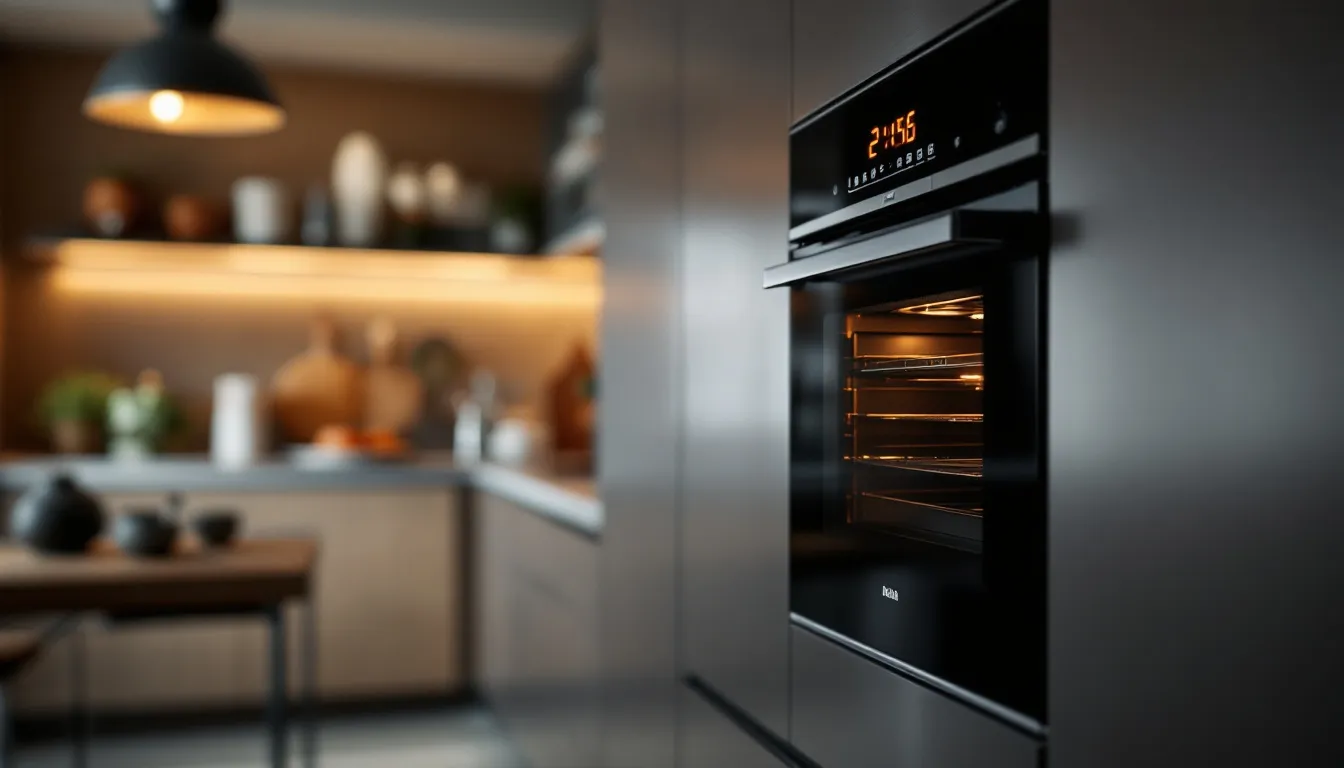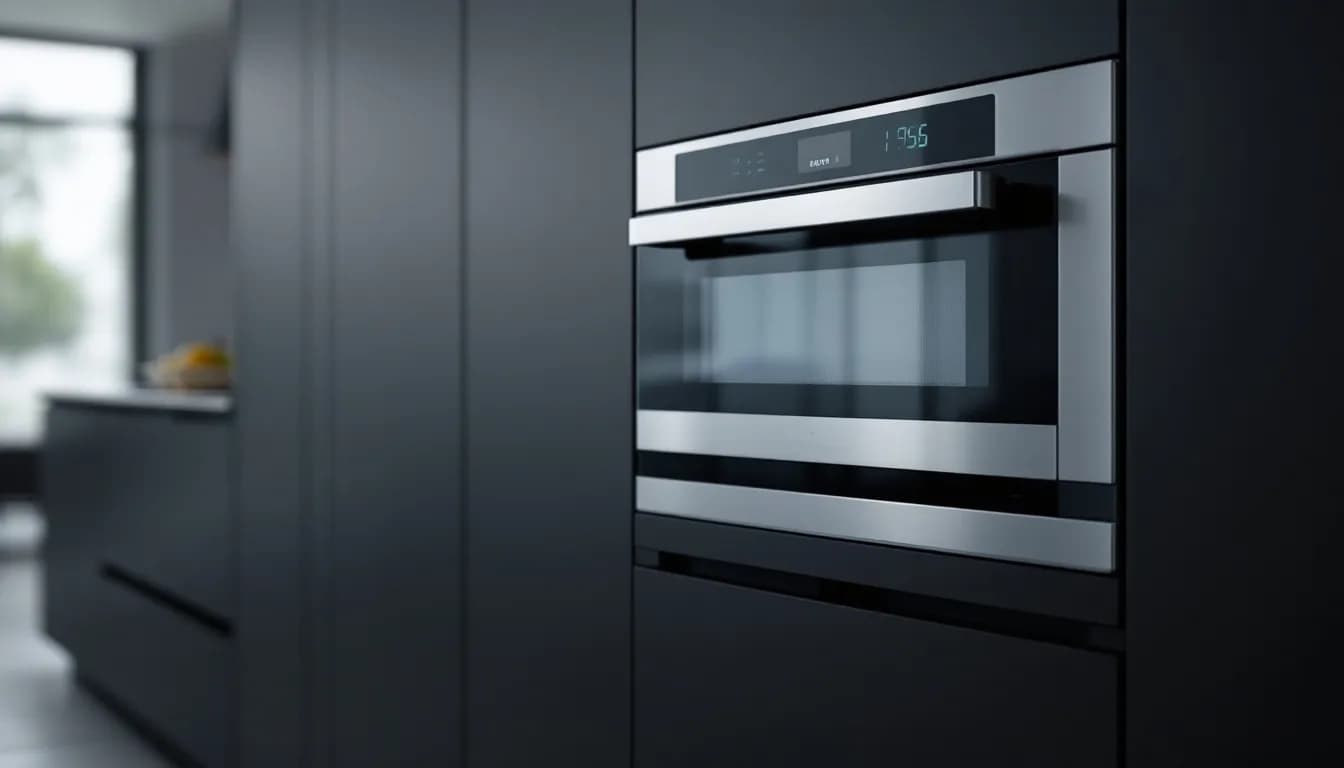
For a long time the microwave was the appliance you sat on top of a wall unit, chosen quickly and forgotten just as fast. Those days are over. Today's models combine steam, grill and conventional oven functions, and the way they are integrated into the cabinetry radically changes the legibility of the kitchen. Choosing well means weighing up power, capacity, type of installation and durability.
Real power, not the showroom figure
The advertised power applies only to the pure microwave mode. Entry-level models hover around 700 W, mid-range ones at 900 W, premium models at 1000 W and above. Beyond 1000 W the practical gain is marginal for cooking, but even reheating becomes noticeably faster.
Above all, check the modulation: an appliance that drops to 100 W or 200 W lets you defrost or melt chocolate without breaking the texture. Budget models simply switch the magnetron on and off in intervals, which dries food out.
For the combination functions, the grill power (generally 1000 to 1500 W) and the conventional oven power (up to 2500 W with fan assistance) become the real criteria for use. A good-quality combination microwave replaces a small secondary oven.
Usable capacity: 20, 25 or 30 litres
Three main sizes shape the market. The 20-litre models suit single people and occasional use, but limit you to an individual dish. The 25-litre models are the standard for households of 2 to 4 people, taking a 30 cm round dish. The 30 litres and above are necessary for combination steam and grill models, and let you cook a whole chicken.
Take care to distinguish usable capacity from gross capacity. The turntable, sometimes bulky, reduces the space you can actually use. Some high-end models have a flat tray or turntable-free cooking, which frees up 20 to 30% of the space.
The functions that justify the investment
The pure microwave cooks, defrosts and reheats. The grill combination adds browning and quick roasting. The oven combination allows fan-assisted cooking up to 230°C and replaces a secondary oven in a compact kitchen. The steam combination, more recent, opens the way to low-temperature cooking, crisp vegetables and delicate fish without drying out.
The automatic functions by category (pasta, fish, meat, cakes) have become more relevant with humidity sensors, which adjust the cooking in real time. A yoghurt or bread function pushes the versatility towards genuine workshop use.
| Type | Main use | Power | Indicative price |
|---|---|---|---|
| Solo | Reheating, defrosting, simple cooking | 700 to 1000 W | 80 to 200 € |
| Grill | Reheating, browning, quick roasting | + 1000 to 1500 W grill | 150 to 350 € |
| Steam combination | Low-temperature cooking, steam, secondary oven | + 2500 W fan-assisted | 600 to 1800 € |
Freestanding or built-in fitting
The freestanding microwave sits on a worktop or a wall unit. It is the economical, immediate option, but it takes up precious surface and often breaks the visual coherence of the kitchen.
Built-in fitting in a dedicated column has two advantages: it places the appliance at shoulder height, with the right ergonomics, and it aligns the front with the conventional oven. The most common built-in standards are 38 cm for compact models and 45 cm for combination models, in a niche 56 cm wide. Be sure to check the dimensions of the oven you are considering before fixing a column in joinery.
Buying criteria
- Power adjustable down to 100 W for defrosting and chocolate without breaking the texture
- Usable capacity to suit: 20 L solo, 25 L family, 30 L and above for combination
- Level of functions justified by use: pure, grill, oven or steam combination
- Built-in standard (38 or 45 cm) matched to the column before joinery
- Fitting height at the main user's shoulder, conventional oven below the microwave
One rule sums up the rest: the choice of the appliance and the choice of the unit that houses it are decided together, never one after the other. By fixing the built-in dimensions before the joinery, you avoid last-minute fixes, and the microwave reads as part of the kitchen rather than an object placed on top of it. To think the column through as a whole, this reasoning is best cross-referenced with our criteria for choosing a built-in oven, the neighbouring appliance with which the microwave shares a front and an alignment.