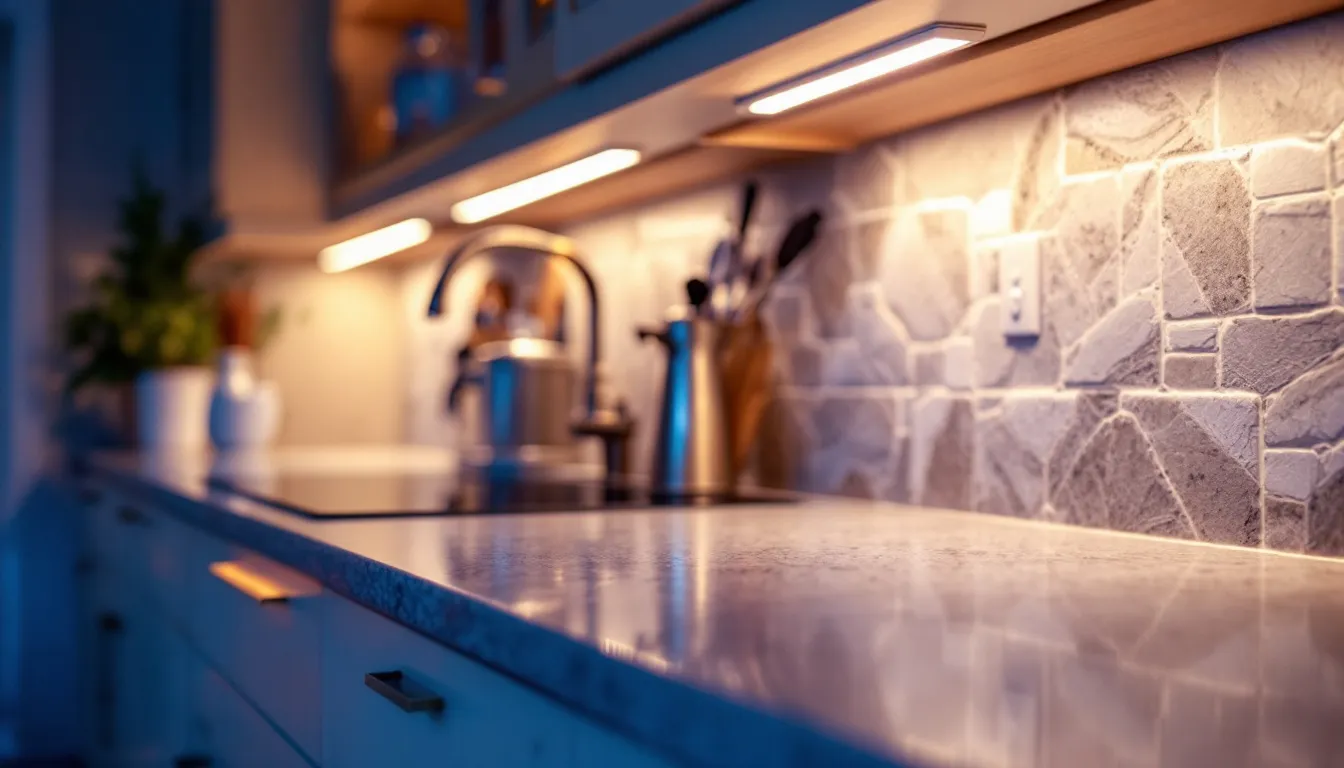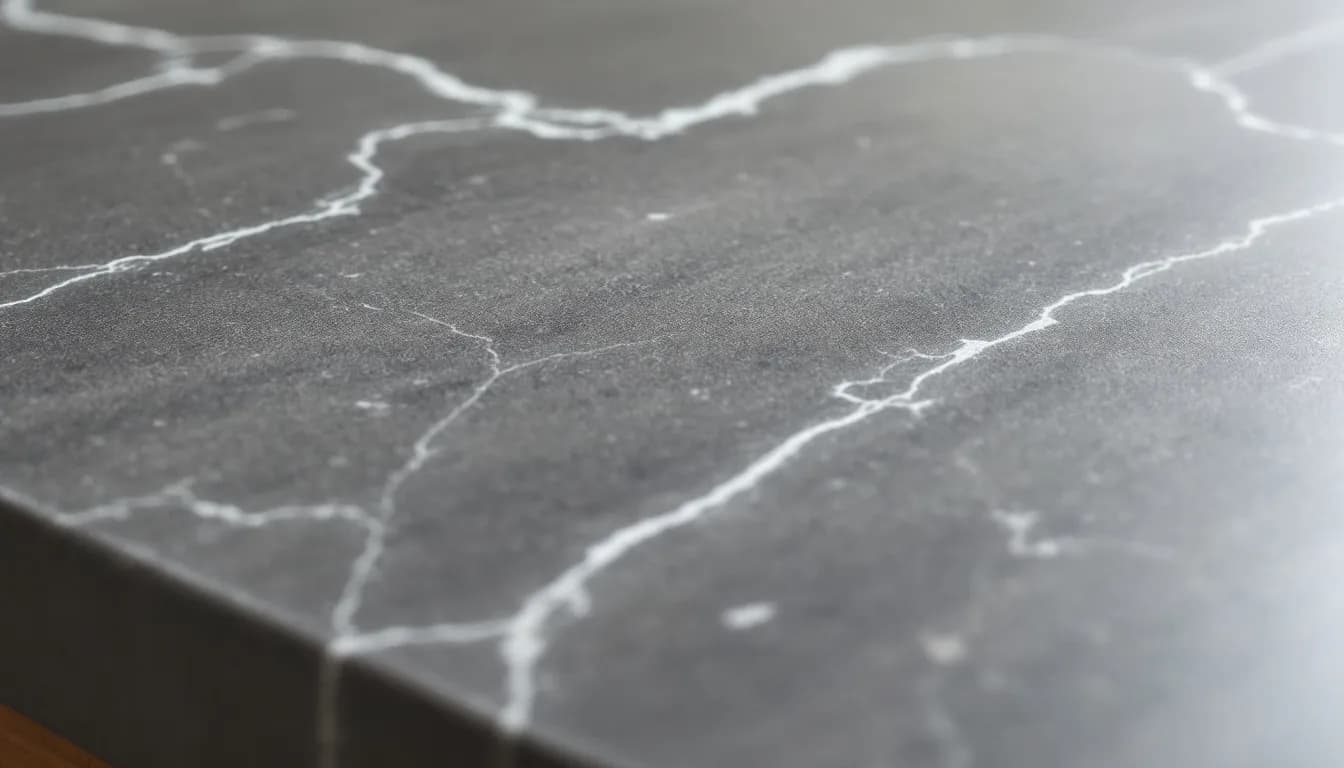
Technical ceramic has established itself in just a few years as the reference material for demanding worktops. It combines what natural stone and quartz never offered together: total stability in the face of heat, stain resistance with no special care, and a visual finish that does not cheat with the material it imitates.
What is technical ceramic?
The ceramic slabs intended for worktops are very high-density porcelain stoneware, fired at more than 1200°C. The manufacturing process, by high-pressure pressing and sintering, produces a material that is homogeneous throughout its thickness, generally between 12 and 20 mm for kitchen use.
Unlike conventional tiles, these slabs come in formats up to 320 cm long, which makes it possible to cover an entire worktop or island without a single joint. It is this visual continuity, combined with a finesse of material close to genuine stone, that has transformed the perception of ceramic in the kitchen.
1200°C
Firing temperature
7 to 8
Mohs hardness
12-20 mm
Common thickness
320 cm
Max length without a joint
The technical advantages that change everyday use
Ceramic tolerates direct heat. You can set a pan straight off the hob onto the worktop without a trivet. No other worktop material allows this so confidently, apart from industrial-grade stainless steel.
Its surface, non-porous by nature, resists the acids in lemon, wine and vinegar, and does not stain during cooking. Oil, coffee and tomato sauce wipe off with a damp cloth, leaving no mark even after several hours.
Scratch resistance is high but not absolute. A scratch in ceramic remains possible, provided you use a metal spoon with force or a carbide object. The Mohs hardness of technical porcelain stoneware lies between 7 and 8, whereas the steel of a kitchen knife is around 5.5.
Matt, polished and stone finishes
The choice of finish radically changes the character of the worktop. A textured matt finish evokes raw natural stones and hides fingerprints. A polished finish catches the light like marble, with a more contemporary look. The stone-effect finishes, particularly accomplished from certain Italian manufacturers, reproduce the veining of Calacatta, Sahara Noir or Statuario with an accuracy that only the large slab allows.
For a kitchen open onto the living room, the finish sets the mood as much as the cabinet fronts do. A sand-coloured matt ceramic goes with light woods and soft lacquers. A polished veined ceramic sets a strong visual focal point around the island.
The limits to know about
Ceramic can crack under a sharp localised impact, particularly on the edges. A full bottle dropped onto a sharp edge can chip the material. This is why rounded corners and ogee edges are recommended in high-traffic areas.
Repairs are possible but visible. Unlike engineered quartz, a chip cannot be made good by sanding. It is a material to be respected rather than taken for granted.
Key takeaways
- Tolerates the direct heat of a pan straight off the hob
- Non-porous surface, unaffected by acids and stains
- Slabs up to 320 cm, worktops and islands without joints
- Sensitive to localised impacts on sharp edges
- Matt, polished or genuine stone-effect finishes
In summary
Ceramic is not a perfect material, it is an honest one: unbeatable on heat, stains and acids, more demanding on edge impacts, which need to be addressed with ogee or rounded edges. Two details will then make the difference between a well-fitted ceramic worktop and a simply good one: the thickness of the edge, adjusted to the design of the cabinet front, and the mastery of joints over very long runs. It is this consistency of fitting, more than the brand of the slab, that distinguishes a considered kitchen from an assembly of good products.
The right instinct to go further is to set ceramic against its closest alternative, the quartz worktop: it is by comparing how they behave with heat and scratches that the choice becomes clear for your real use.