Glass fronts left the showroom display case long ago. Today they fit out family kitchens, where they bring a visual depth and a relationship to light that no other material reproduces. You still need to know what you are choosing: satin glass, toughened glass, lacquered glass and frosted glass do not offer the same finish or the same care.
Why glass transforms how a kitchen reads
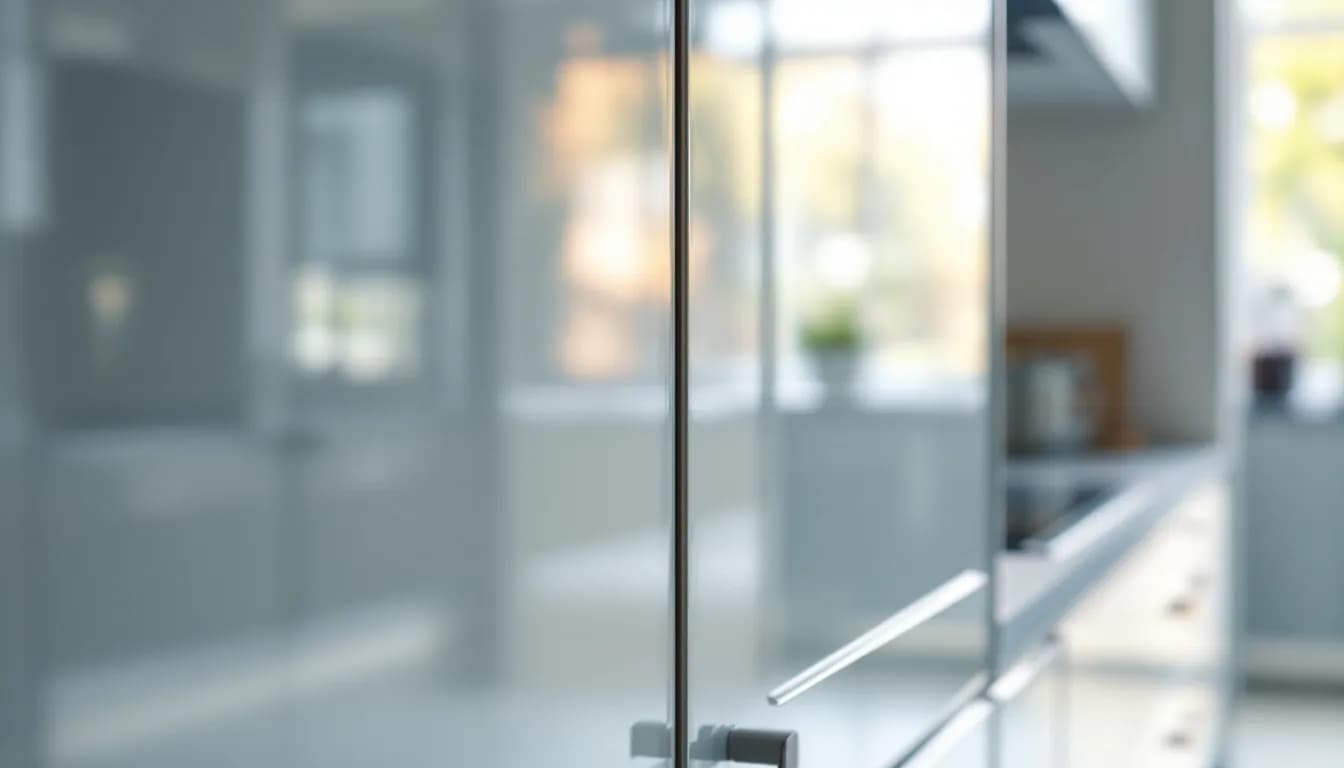
Glass is the only front material that reacts to light in depth. A lacquer, even a glossy one, reflects light at the surface. Satin glass, by contrast, lets light pass through its thickness and diffuses it from within the front. It is this effect that gives contemporary glass kitchens their recognisable signature.
Glass visually lengthens the room. Along a run of wall units, it acts like a second window, capturing the light from the bay and gently redistributing it. This is particularly valuable in Belgian kitchens, where the supply of natural light stays limited for a good part of the year.
The main families of glass used
Toughened glass is the technical basis of all kitchen fronts. It resists thermal shock and moderate impacts, and breaks into harmless fragments if it shatters. On this basis, various treatments are applied.
Lacquered glass receives a high-temperature paint on its underside, which produces a deep, stable colour over time, with no variation in the light. Satin glass is frosted on the surface, which softens the light and slightly hides fingerprints. Extra-clear glass, finally, is used on the lightest fronts, to avoid the greenish tint of standard glass.
Each family has its own finish. Glossy lacquer catches the light, satin diffuses it, matt frosting partly absorbs it. The choice depends as much on the orientation of the room as on the general character of the project.
Everyday care
This is the question everyone asks, and rightly so. A bare glass front holds fingerprints, especially in dark colours. Modern surface treatments, anti-fingerprint or hydrophobic, have clearly improved the situation: a wipe with a slightly damp microfibre cloth is enough to restore the front to its original look.
A few precautions remain useful. Avoid abrasive detergents, which can scratch surface treatments over time. Clean horizontally rather than in circles, so as not to create visible patterns. And deal with greasy splashes straight away, as they cling more stubbornly once dry.
Over time, glass ages remarkably well. It does not yellow, does not lose its brilliance, and does not mark as a lacquer can when knocked in one spot.
The advantages of glass
- Unmatched visual depth, light passes through the thickness
- Perfect stability over time: no yellowing, no loss of brilliance
- Damp microfibre care, effective anti-fingerprint treatments
- Wide colour palette, from extra-clear to deep tones
- Ideal for amplifying light in a kitchen with little exposure
Where to place glass fronts in the composition
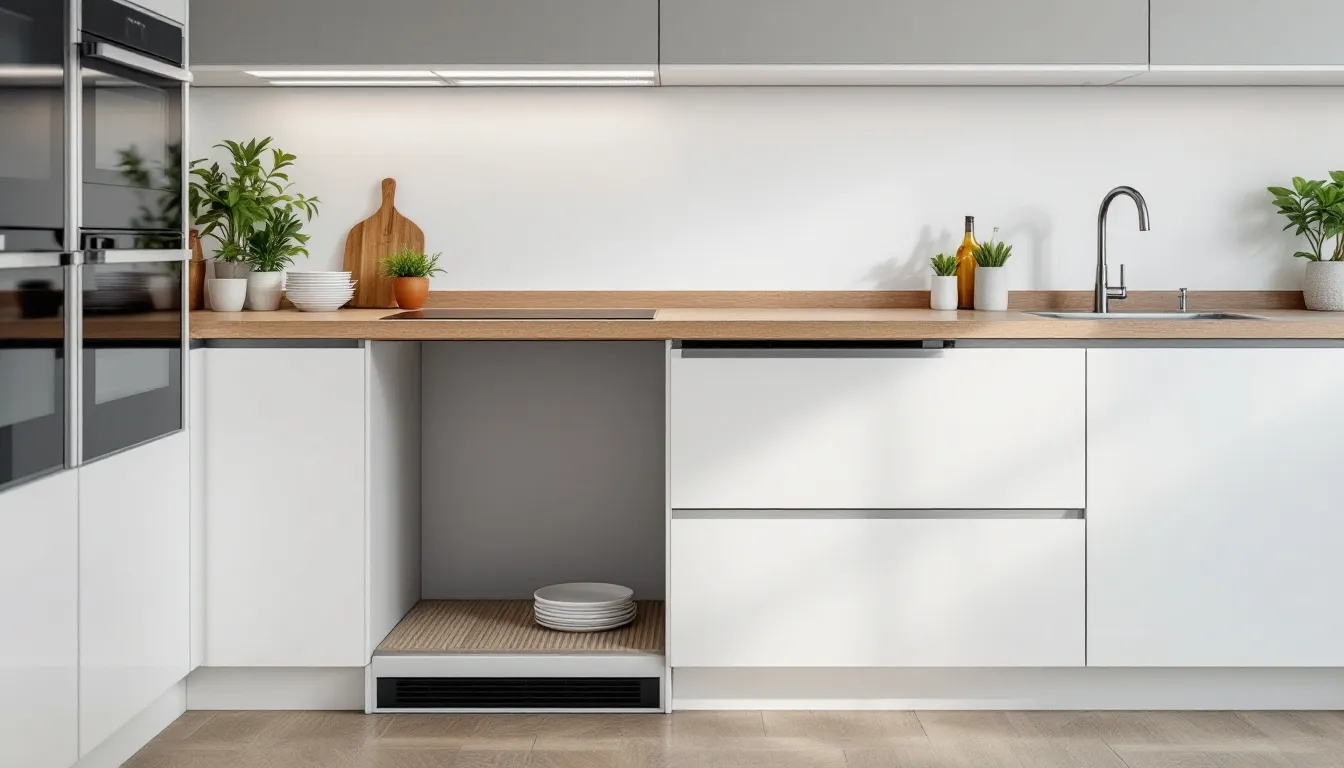
Entirely in glass, a kitchen can become cold. The right move is often to combine: glass fronts on the upper run, opaque fronts in lacquer or wood on the base units, a worktop in a warm material such as stone or sand-tinted engineered quartz.
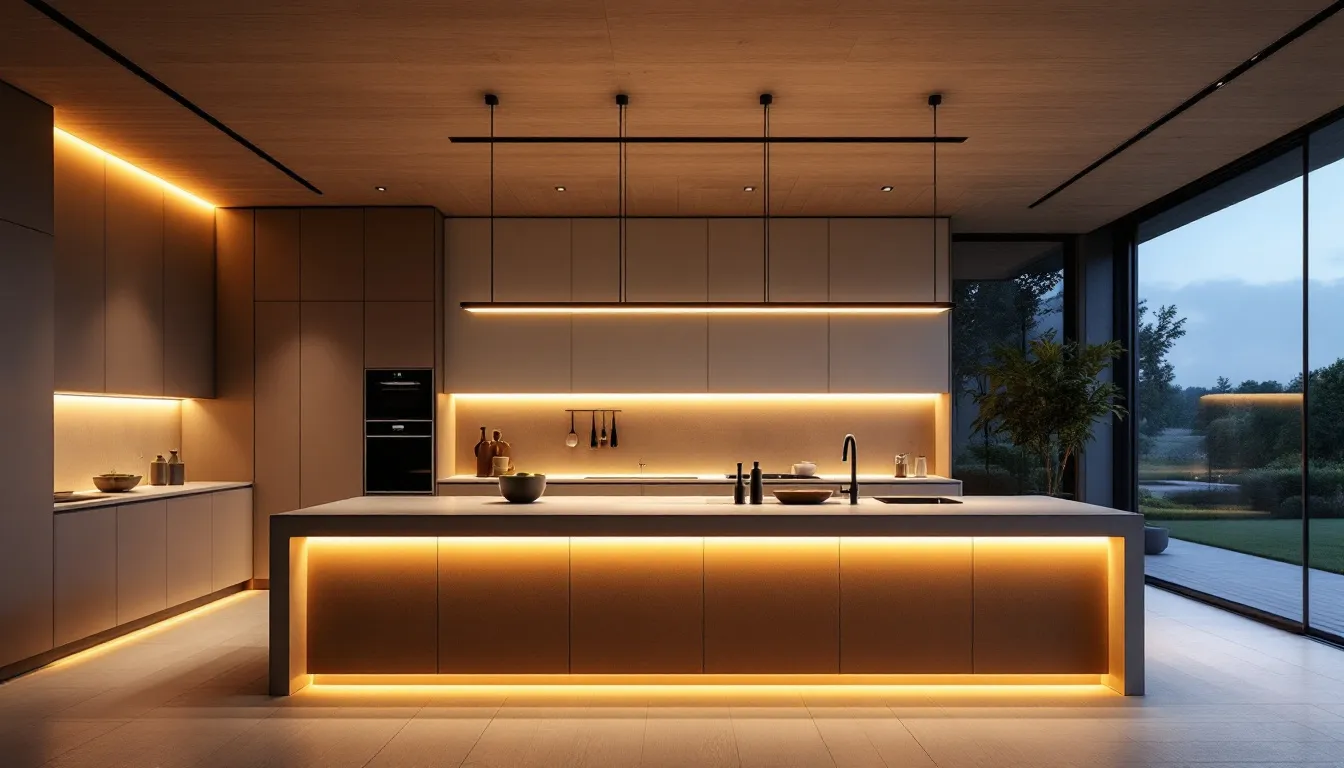
Glass fronts also work very well on tall columns lit from within, which then become discreet scenographic elements in the room. For base units, glass is more rarely the choice, except on push-pull fronts where the handle-free look comes into its own.
Our view
Glass gives its best when treated as a structural material and not as an added finish. That is the idea behind a collection such as Frame, designed by Massimo Iosa Ghini around the glass front alone: a fine metal frame draws the lines, the satin glass treated on its underside lets the light play in the thickness. Whatever the chosen programme, glass is always judged in real light, at the scale of the whole run. A sample a few centimetres across tells you nothing about how a complete front will look.