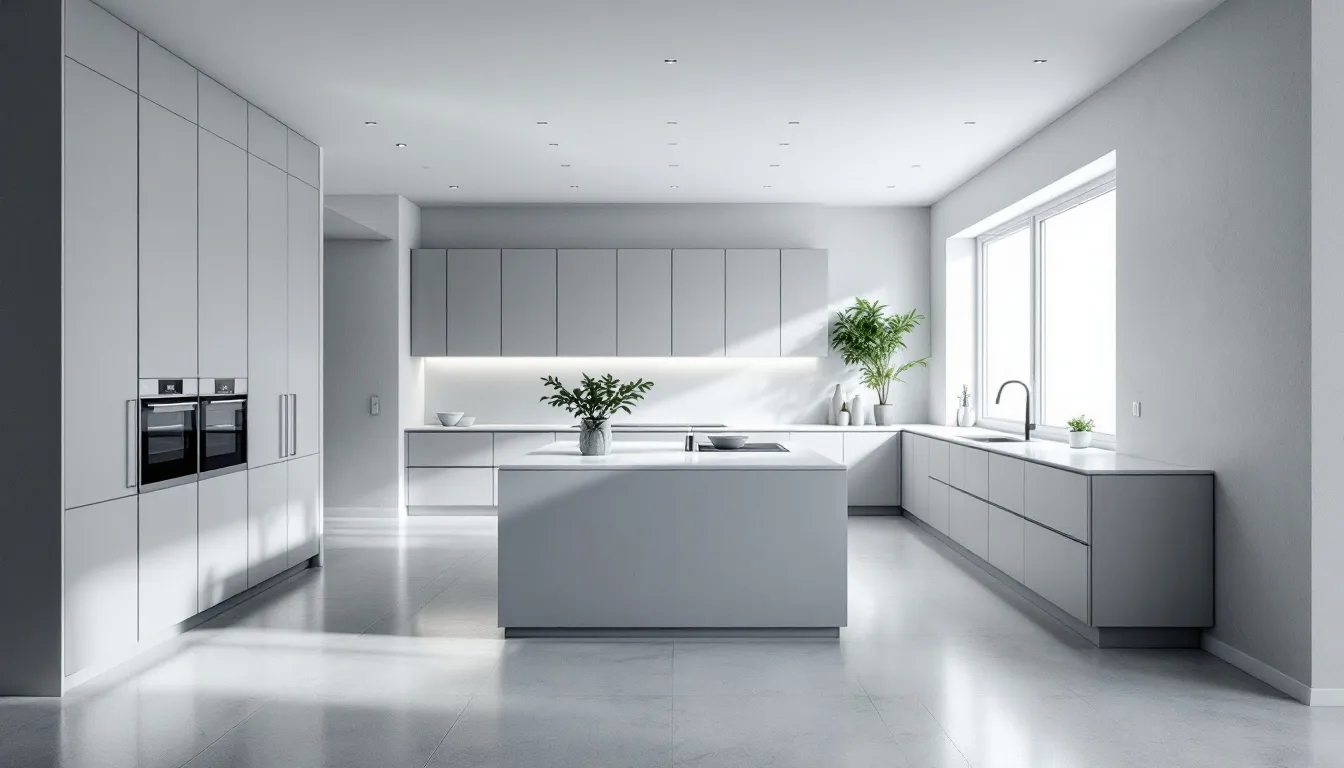
Ventilating a kitchen no longer comes down to choosing a hood above a hob. With kitchens opening onto the living room becoming the norm, the subject has moved centre stage: the aim is to extract vapours and smells without excessive noise, without breaking the line of the design, and while respecting the technical constraints of the home. Italian designers have turned this integration into a field of expression in its own right.
Why ventilation shapes everything else
A kitchen without effective extraction ends up smelling throughout the room, and well beyond it. On powerful induction hobs, greasy vapours rise quickly, settle on the wall units and the ceiling, and saturate the textiles of the neighbouring lounge. Poor ventilation also means trapped moisture, which over time weakens the timber and the joints.
Airflow standards vary with the configuration, but the useful order of magnitude for an open kitchen sits around 600 to 900 m³/h at peak, with a quiet mode at moderate flow for everyday cooking. External extraction remains far superior to recirculation through charcoal filters, whenever it is technically possible.
Suspended island hoods
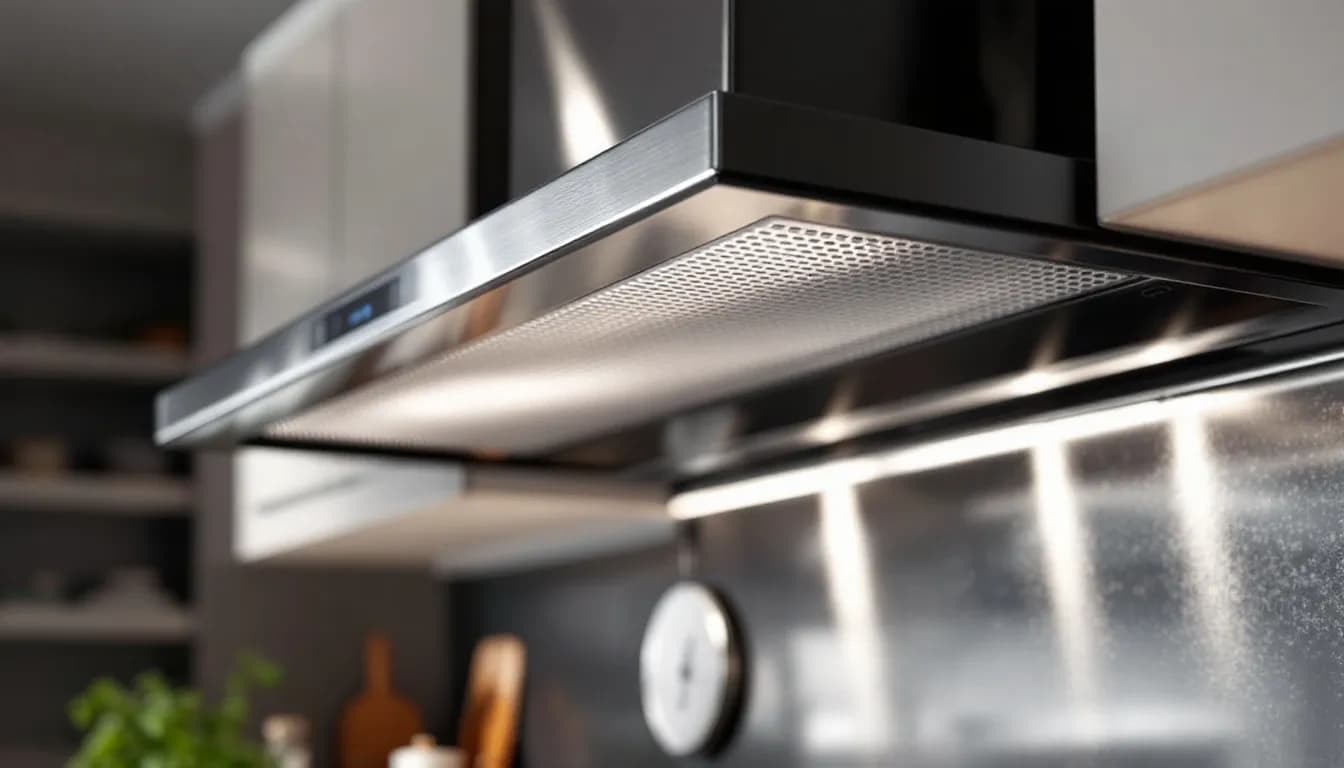
This is the bold gesture of the contemporary kitchen. An island hood suspended above the hob, lowered to the right height, signs the design as a single element. It can be in brushed stainless steel, black glass, matt ceramic, or dressed in a box built into the ceiling housing.
The advantage is efficiency: the hood is centred on the source of the vapour, the airflow is controlled, the noise stays contained. The drawback is the visual bulk, which calls for serious thought about ceiling height and the overall perspective of the room.
Ceiling hoods
A ceiling hood fits into a recessed housing above the island and all but disappears from view. With well-designed perimeter lighting, all you see is a discreet grille and a strip of light. The airflow is generally higher than that of an equivalent island hood, because the suction area is larger.
It is the most elegant solution when the structural slab allows it and the external extraction can run through the loft or a false ceiling. The trade-off lies in the cost and the complexity of fitting.
| Type | Usual airflow | Aesthetics | Constraints |
|---|---|---|---|
| Built into wall unit | 400 to 600 m³/h | Discreet, aligned with the front | Wall unit height fixed |
| Suspended island | 600 to 900 m³/h | Bold gesture, signs the design | Visual bulk, ceiling height |
| Integrated ceiling | 700 to 1000 m³/h | Almost invisible, grille only | Structural slab, false ceiling, cost |
Downdrafts and worktop-integrated hoods
Downdrafts, those hoods that rise out of the worktop beside the hob, win people over with their invisibility. Their efficiency has improved a great deal, but they remain less effective than a traditional extractor hood on heavy pan-frying. They suit boiling and steaming well, frying less so.
Hoods integrated into the depth of the wall unit, hidden behind a front that lifts or pivots, offer a good compromise. They keep the performance of a classic hood while disappearing into the run of units.
The right choice always plays out across three simultaneous parameters: the airflow genuinely needed, the extraction route possible within the home, and the place the hood occupies in the perspective of the room. Once these three constraints are laid out together, the most fitting solution often imposes itself, well before the question of style.
Going further
Ventilation is never thought through on its own: in an open-plan room, it converses with the light, the perspective and the tall furniture. To bring the hood into harmony with the rest of the atmosphere, our guide to the art of lighting an open kitchen sheds useful light on the subject, zone by zone.