A beautiful kitchen can be unusable. A poorly positioned worktop, circulation that is too narrow or lighting that casts a shadow is enough to spoil months of aesthetic thought. Ergonomics is not a technical subject reserved for professionals: it is at the heart of the design of any ambitious kitchen, and Italian designers understood this long ago.
90-92 cm
Worktop height
100 cm
Island clearance
65 cm
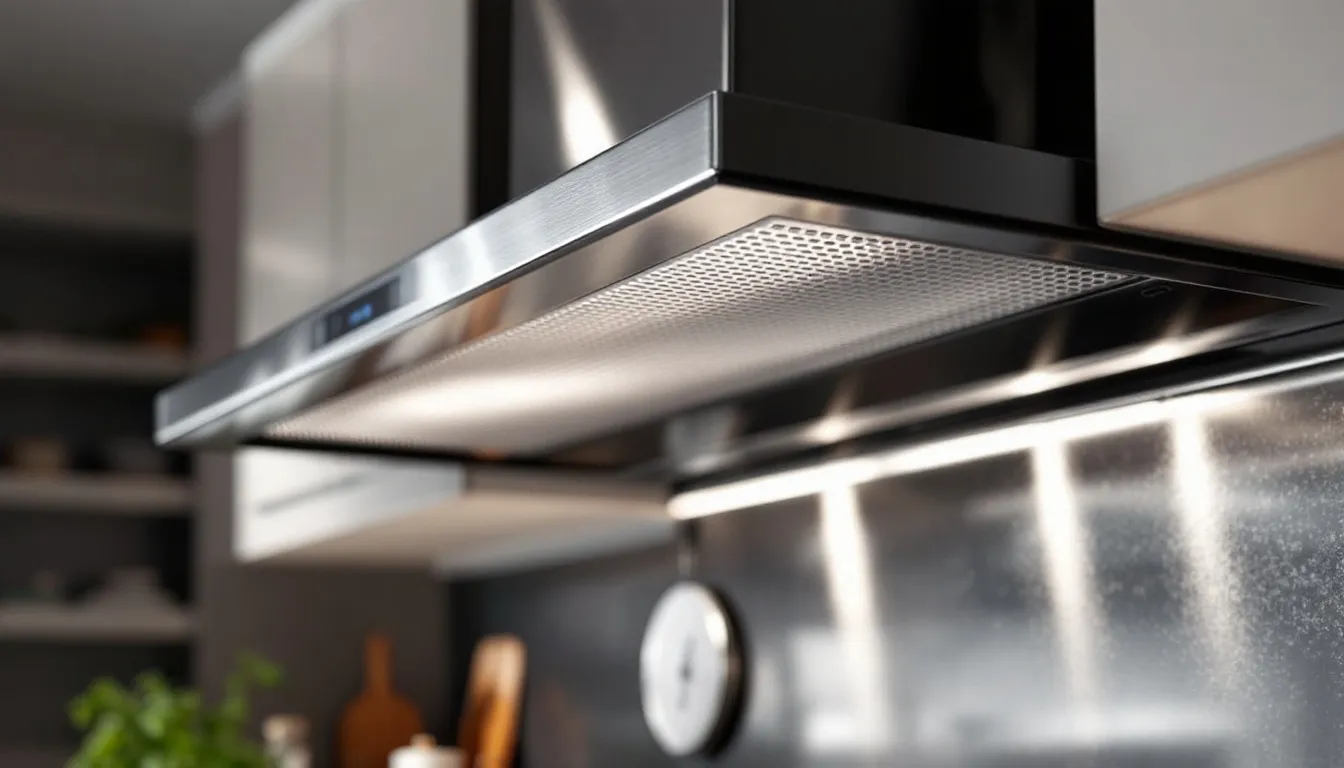
Extractor above
500 lx
Worktop
| Zone | Recommendation | Indicative dimension |
|---|---|---|
| Preparation area | Main worktop height | 90 to 92 cm |
| Hob | Extractor above the hob | 65 to 75 cm |
| Sink | Height of the lever | 100 to 110 cm |
The standard worktop height sits around 90 to 92 cm, but this norm does not suit everyone. For a tall main user, you can go up to 95 or 97 cm without forcing anything. For a shorter person, dropping to 88 cm changes the strain on the back during long preparations.
The simple rule is to measure the distance between the floor and the elbow bent at a right angle, then take off about 10 to 15 cm for the work zone. On the hob, you can allow a slightly lower height so you do not have to lift pans too high. This difference of a few centimetres, invisible to the eye, transforms everyday use.
The distances that make the difference
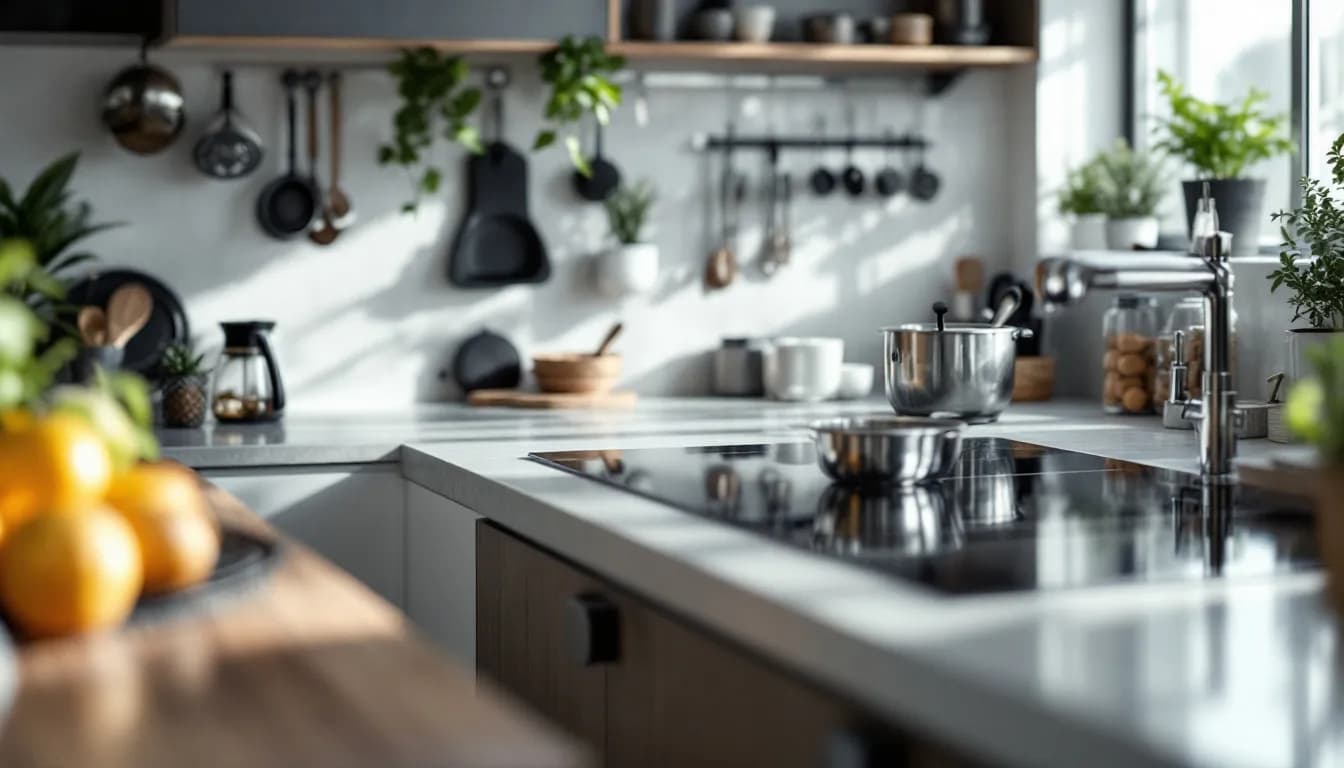
Between an island and the back run, comfortable minimum circulation sits around 100 to 110 cm. Below 90 cm, two people can no longer pass each other, and opening two unit doors at once becomes impossible. Beyond 130 cm, you lose the fluid movement between the two surfaces, and the kitchen becomes tiring over time.
For heavily used kitchens, you also consider the distance between the hob and the water point. Ideally, these two elements stay less than 1.5 m apart, so you do not cross the room with every move. The fridge can be further away, since you open it less often during the cooking itself.
Worktop lighting
Cooking in your own shadow is a silent cause of mistakes and minor injuries. The worktop must receive direct light, powerful enough and positioned so that your body does not interrupt the beam.
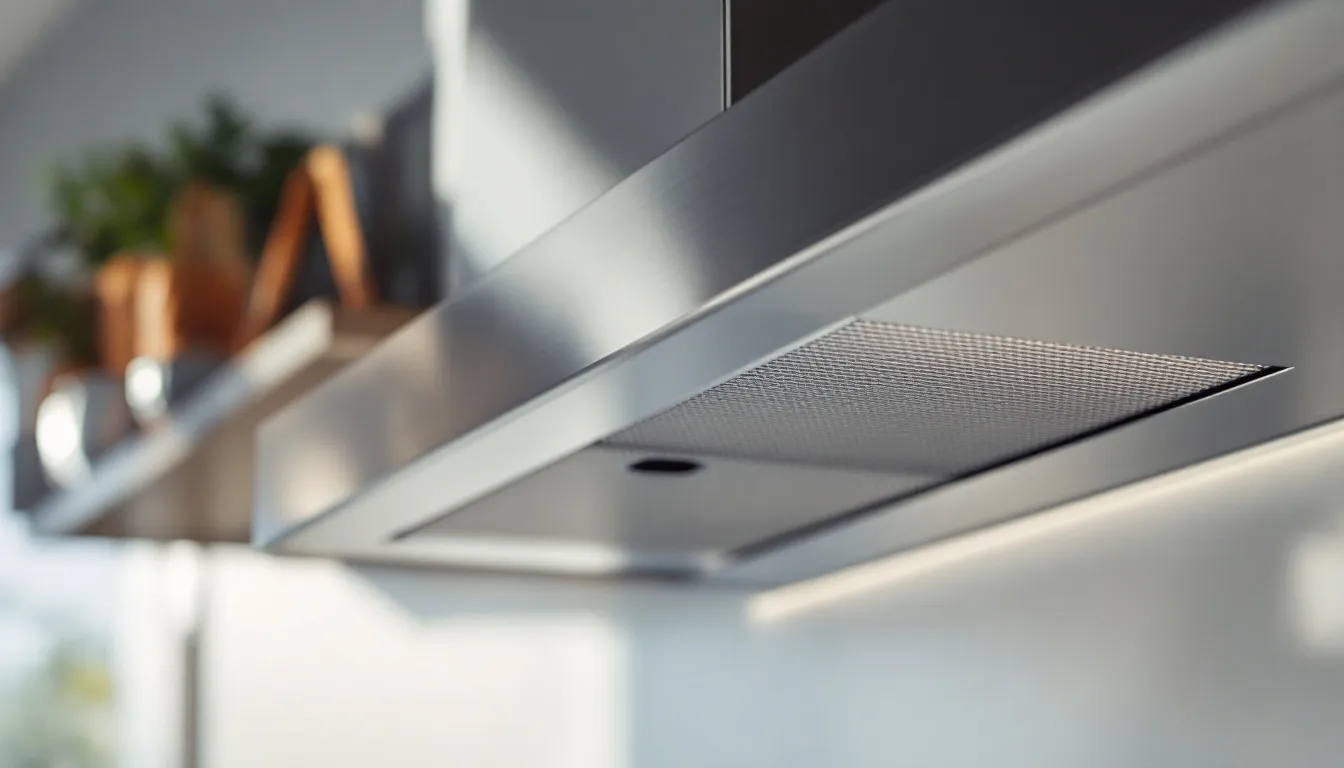
The most effective solution remains linear lighting integrated under the wall units, in warm or neutral LED depending on the look you want. On an island with no wall units, you provide pendants brought down to height, or adjustable spots integrated into the ceiling, calibrated to light the worktop rather than the floor.
The lighting of the hob depends on the extractor. Island and ceiling extractors generally include their own lighting, which you should check in the catalogue before validating the configuration.
Integrating appliances in a column
Putting the oven at eye level is one of the simplest and most rewarding ergonomic moves. You no longer bend down to put in a hot dish, visual control is immediate, and access becomes safe for all users.
Columns today integrate oven, microwave, steam oven, coffee machine and warming drawer in a single vertical arrangement. This configuration frees the worktop and concentrates the appliances in an identified zone, more efficient than the classic scattering.
For the dishwasher, raising it by 20 cm also transforms the loading movement. The loss of low storage is offset by the gain in comfort, especially during long clearing-up sessions.
Taps and controls
A single-lever mixer tap remains the safest: one-handed operation, flow and temperature set in the same movement, with no prolonged contact when your hands are full. Models with a pull-out spray make it easier to rinse large items and clean the bowl.
Induction hobs with a central touch slider control are more precise than separate controls around each zone. They let you lower a temperature mid-cooking without hunting for the right button.
None of these adjustments, worktop height, distances, lighting or taps, is noticeable once the kitchen is in place. It is their silent sum that makes the difference: a kitchen you inhabit without thinking about it remains the best proof that it has been well designed.
From principle to project
These principles come into their own in a composition conceived as a single whole, where appliance columns, worktops and island answer the same logic. The Living collection gives an accomplished reading of this, and its Modula model, worth seeing in the showroom, shows how ergonomics serves the design rather than the other way round.