A clean kitchen is won first at the drawing stage, then at the moment the materials are chosen, and only in third place at the moment of cleaning. The rooms easiest to maintain are those where dust has no corner to settle in, where surfaces rinse off in one gesture, and where every accessory can be taken apart. The rest is simply habit.
Surfaces decide cleanliness before the products do
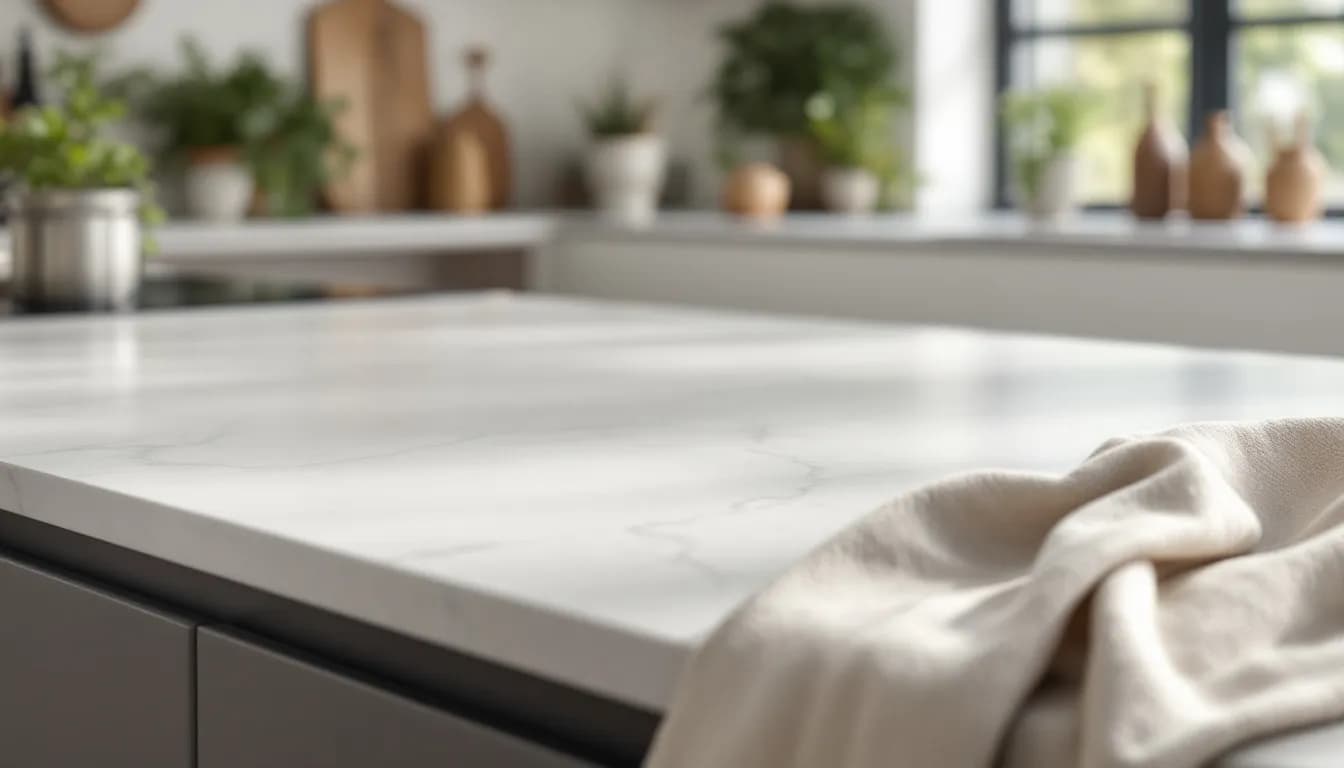
On a rough worktop, any detergent will deliver less than it promises. The porosity holds the pigments of coffee, turmeric and red wine. By contrast, a worktop in full-body ceramic, reconstituted quartz or brushed stainless steel cleans with a microfibre cloth and lukewarm soapy water. Matt lacquered doors handle cooking grease well if they have an anti-mark treatment. Solid laminate doors call for more frequent wiping near the hob. The right instinct: choose the material according to the area, not according to the catalogue photo.
Internal organisation limits proliferation
A hygienic kitchen is one where nothing is left forgotten at the back of a drawer. Removable dividers, food-grade plastic bins that go through the dishwasher, drawer interiors visible the moment they open: these are what make the difference over time. The integrated bin must be ventilated and reachable without direct contact. The base units for damp products, beneath the sink in particular, benefit from a waterproof lining on the base, easy to remove to check for any leak. It is a discipline of design that translates into time saved every day.
The sink station deserves specific attention
The sink concentrates water, waste, dirty dishes and damp cloths. It is statistically the most contaminated point of a domestic kitchen. Prefer an undermounted sink in 304 stainless steel or composite, welded to the worktop, with no inset rim where residue gathers. The choice between stainless steel and granite composite is decided as much on hygiene as on use. The tap must be cleanable at its base, where limescale takes hold. A sponge left in the bowl reloads with bacteria within a few hours: place it on a draining holder, or replace it with a handled brush whose head rinses completely. Disinfect once a week with a solution of heated diluted white vinegar, then rinse thoroughly.
The care rhythm to keep
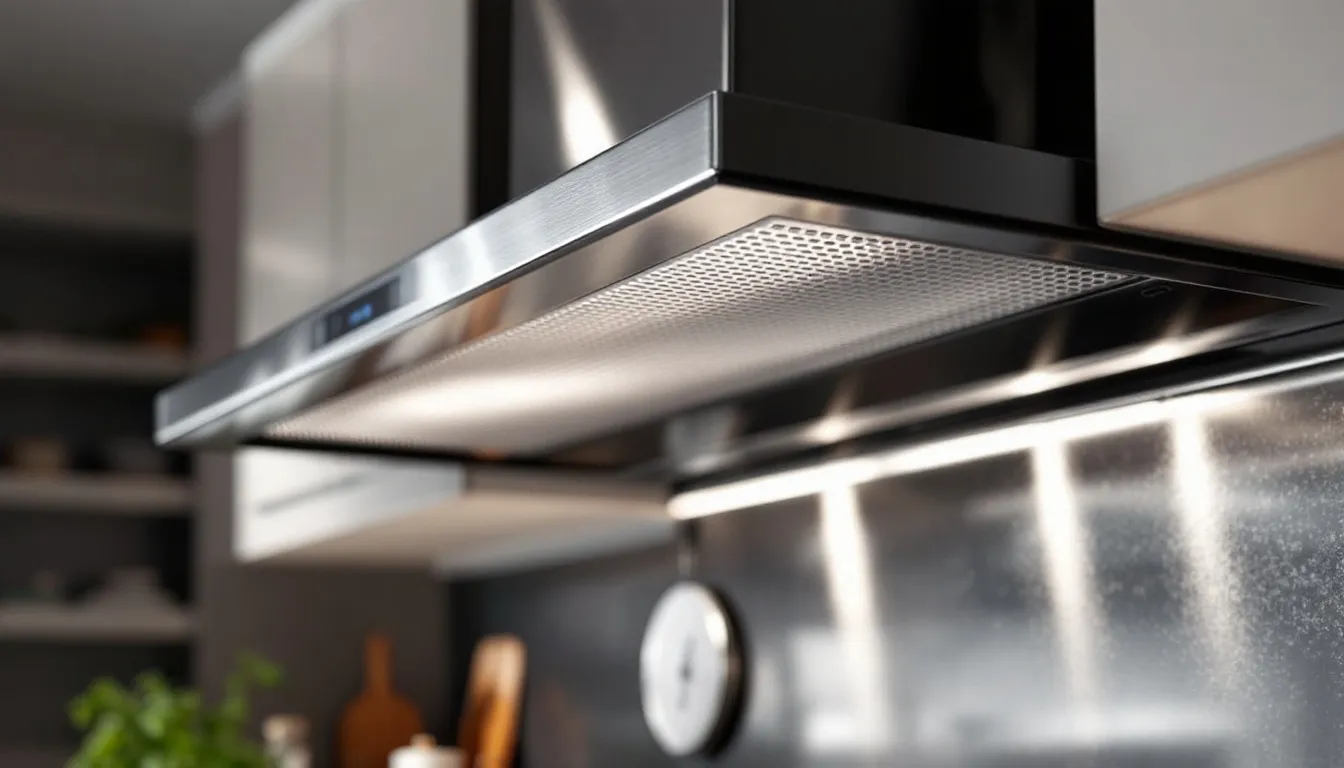
The daily round is short: wipe the worktops after each preparation, empty the bin every evening, run a cloth over the handles and the nearest switch. The weekly one counts too: clean the hob thoroughly, take out the drawer bins, get behind the tap. The monthly one: extractor filters, dishwasher door seal, underside of the oven. This rhythm does not ask you to set aside time in one block, it asks you to spread the gestures so no station drifts. A kitchen that drifts for three months needs half a day to come back clean.
Daily routine
- Wipe the worktop after each preparation, never at the end of the evening
- Empty the bin every evening, rinse the liner if there is damp waste
- Wipe handles, drawer fronts and the nearest switch
- Drain the sponge or brush on a ventilated holder, never in the bowl
- Run an empty rinse cycle in the dishwasher once a week
A final word
A kitchen stays clean when it has been designed to be, then maintained through small gestures spread out rather than through major chores. Surfaces and organisation carry half the effort, the equipment carries the other: for the latter, our methods for caring for the oven, the extractor and the dishwasher naturally extend this routine.